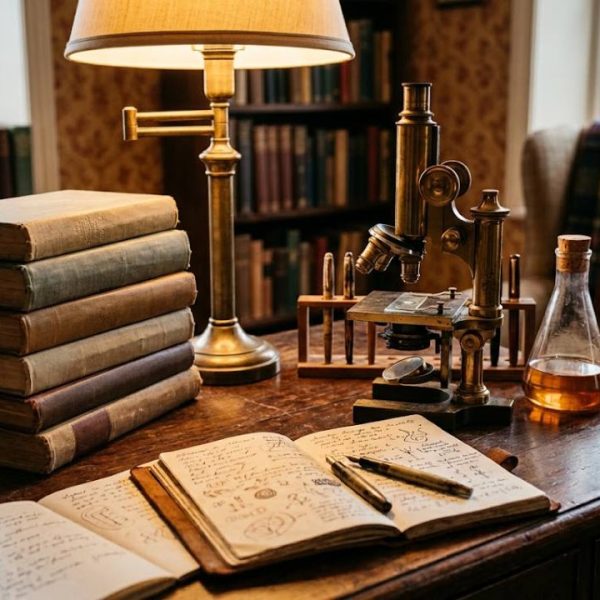
Behind every discovery is a person with a family, a temper, a stubborn question and often a long list of failed experiments. Scientist biographies show that progress rarely comes from a single flash of genius. It comes from curiosity, discipline, collaboration and a willingness to be wrong. Reading about the lives behind major discoveries makes science more human, and it can inspire students and adults to look at the world with fresh eyes.
Why Scientist Biographies Are Worth Reading
A textbook gives the result. A biography explains how someone arrived at it, what they doubted and what it cost them. Stories about Marie Curie working in a leaking shed, Charles Darwin spending decades gathering evidence or Rosalind Franklin refining X-ray images show the patient work behind famous names.
They also reveal how society shaped science. Funding, gender, politics, war and access to education decided who could do research and whose work received credit.
Marie Curie and the Price of Persistence
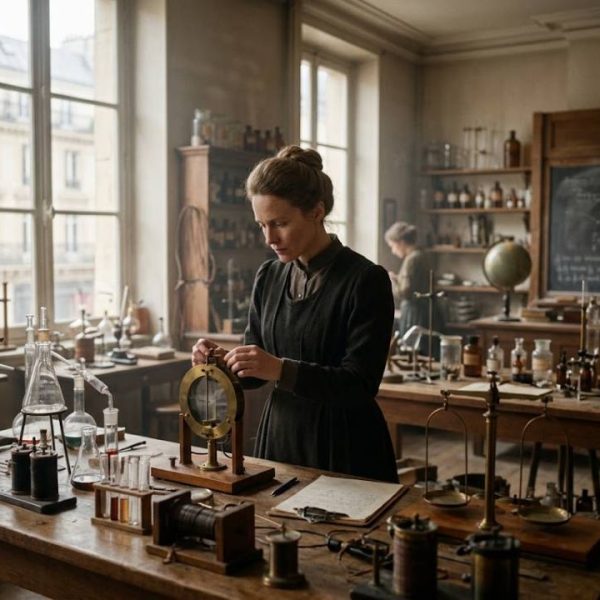
Marie Curie moved from Poland to Paris to study, worked in poor conditions and processed tons of ore to isolate radioactive elements. She won two Nobel Prizes in different sciences and led medical radiography teams during the First World War.
Her story shows that resilience and careful measurement matter as much as brilliance, and that scientific work can have both great benefits and serious risks that were not understood at the time.
Charles Darwin and the Long Road to an Idea
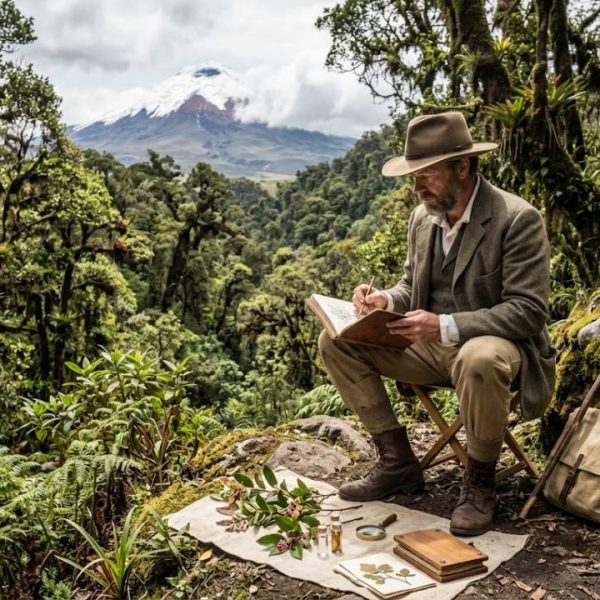
Darwin spent five years on a voyage collecting specimens, then another twenty developing his theory before publishing On the Origin of Species. He wrote thousands of letters, tested ideas with experiments in his garden and worried about the reaction of society.
His life shows how patient observation can transform an entire field, and how scientists build on the work of others.
Rosalind Franklin and Recognition
Franklin produced the X-ray images that were vital for understanding the structure of DNA. Her contribution was under-credited in her lifetime, and her story is often used to discuss fairness and recognition in science.
Biographies help readers understand how collaboration, competition and bias shape who is remembered.
Alan Turing, Katherine Johnson and Hidden Contributors
Alan Turing helped to break wartime codes and laid foundations for computer science, yet he faced cruel treatment because of who he was. Katherine Johnson calculated trajectories for early space flights at a time when Black women were excluded from many roles.
Their lives remind us that talent exists everywhere and that opportunities determine whether it can flourish.
Science Across Countries and Languages
Great scientists came from every continent, but their work often reached the world only after translation. Japanese researchers who won international prizes, for example, published in several languages. Museums, schools and publishers often rely on english to japanese translation services to share biographies with readers in Japan and beyond.
Our notes on English and Romanian scientific translation explain how translators handle terminology when science moves from one language to another.
How to Choose a Good Biography
Look for authors who use primary sources such as letters and notebooks, who note their references and who describe both achievements and failures. Check the publication date, since new evidence may change earlier accounts.
Short biographies and graphic novels are good for younger readers, while longer works suit those who want detail.
Using Biographies in Classrooms and Families
Teachers can pair a biography with an experiment, a timeline or a debate. Parents can read short chapters aloud and ask children what they would have done. Stories make abstract concepts memorable.
Encourage readers to draw or write about a scientist they admire.
Lessons From Scientists Lives
Common patterns appear: curiosity from childhood, mentors who encouraged them, years of hard work and support from friends and family. Many faced rejection and kept going.
These lessons apply to any field, from art to engineering.
Prizes, Honors and Their Limits
Awards such as those described by the Nobel Prize organization bring recognition to some discoveries, but many contributors never receive public credit. Reading widely helps us appreciate the teams, technicians and students who made breakthroughs possible.
Remember that scientific progress is collective.
Contemporary Scientists and Open Science
Today, researchers collaborate across borders, share data openly and communicate with the public online. New biographies and interviews give a glimpse of life in modern labs.
Following working scientists on reliable platforms can inspire young people.
Common Myths About Scientists
Myths include the lone genius, the absent-minded professor and the idea that science is only for a certain type of person. Biographies show that scientists are diverse, creative and social.
Challenging stereotypes opens careers to more people.
Final Thoughts
Scientist biographies connect facts with human experience. They teach curiosity, persistence and humility, and they remind us that every discovery rests on the work of many people.
Pick up one that interests you and see where it leads.
Women in Science and Overlooked Pioneers
For centuries, women faced barriers to education and employment in science. Yet figures such as Ada Lovelace, Lise Meitner, Chien-Shiung Wu and Barbara McClintock produced work of lasting importance. Reading their stories gives a more accurate picture of the history of research.
New books and documentaries continue to uncover pioneers whose contributions were left out of earlier accounts.
Building a Home Library of Science Stories
Start with a few well-reviewed biographies, add picture books for children and visit libraries for more. Share favorites with friends and swap books.
A small, growing collection invites curiosity and gives everyone in the household an entry point into science.
Galileo, Newton and the Birth of Modern Method
Galileo pointed a telescope at the sky, drew what he saw and argued from evidence, even when authorities disagreed. Newton combined mathematics with observation to explain motion and gravity. Their biographies show how new methods can change what people believe is possible.
Both men also made mistakes and faced controversy, a reminder that science advances through debate as well as discovery.
Jane Goodall, Rachel Carson and Science for Nature
Jane Goodall spent years observing chimpanzees and showed that animals have complex social lives. Rachel Carson wrote about pesticides in a way that changed public understanding of the environment. Both combined careful research with clear writing that reached ordinary readers.
Their lives show that communication is part of a scientist work, and that stories can inspire action.
How to Read a Biography Critically
Ask who wrote the book, what sources they used and whether they admire or criticize their subject. Compare different accounts of the same person and notice where they disagree. Remember that memories and letters reflect personal views.
Reading critically makes you a better reader of all history.
Activities for Young Readers
After reading, children can draw a timeline of the scientist life, repeat a simple experiment or write a letter to the person. Family discussions about courage, failure and curiosity turn a book into a lasting lesson.
Visit museums and science centers where original instruments are displayed to bring stories to life.